Project in development, 2026
Time, Sacred is a site-responsive project exploring the material transformation of the Bible through processes of compression, beeswax, and time. The work unfolds between studio experimentation, AI-generated installation studies, and a temporary photographic installation in the ruins of Chiesa di San Bruzio in Magliano in Toscana, Tuscany.
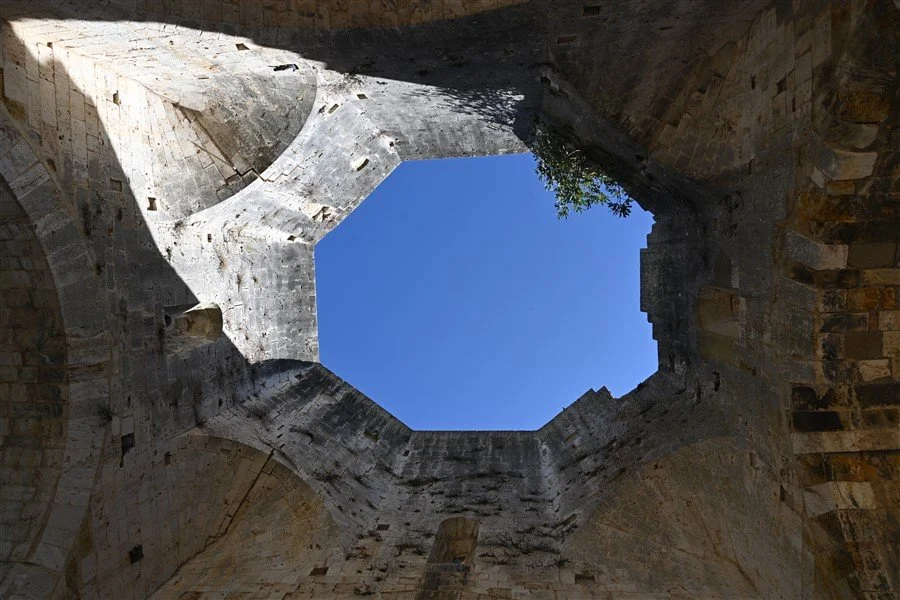
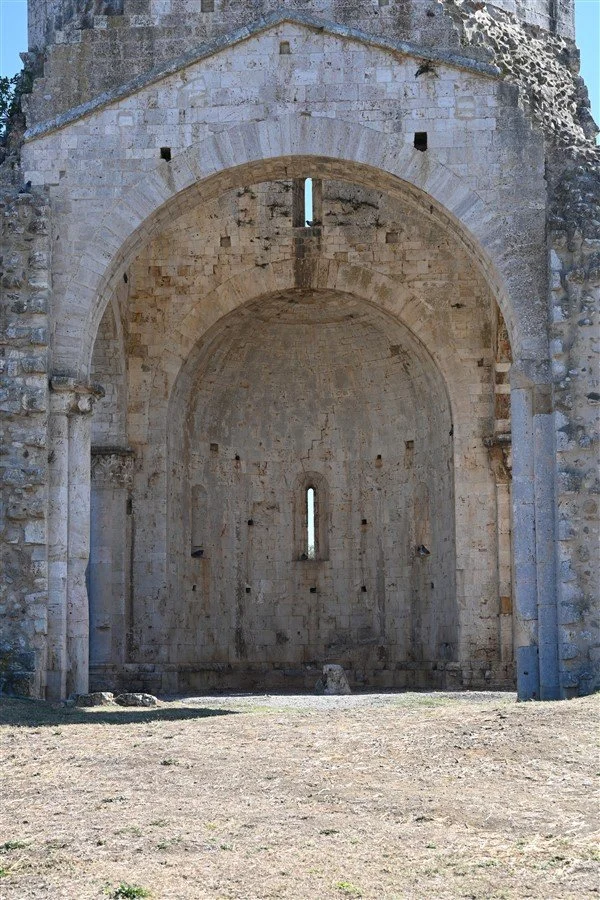
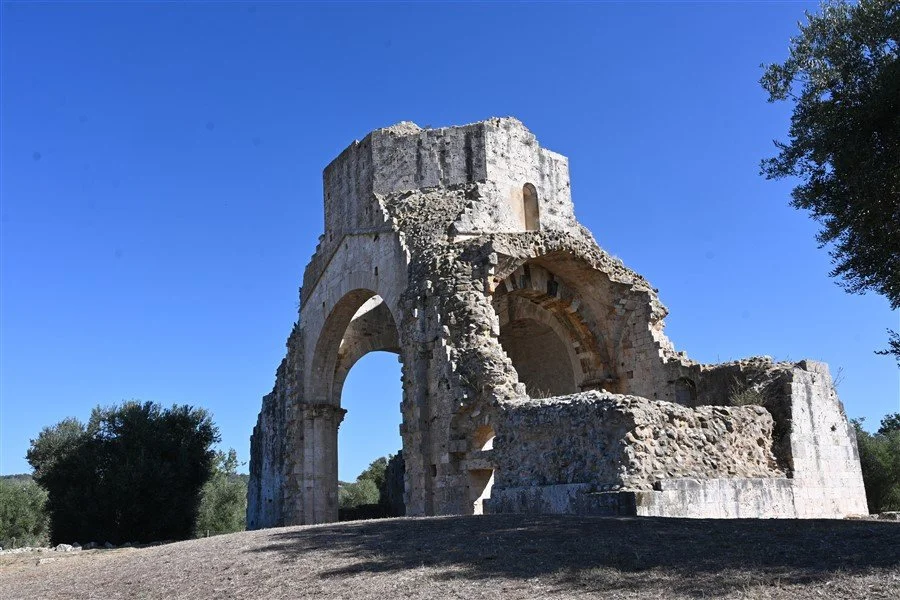
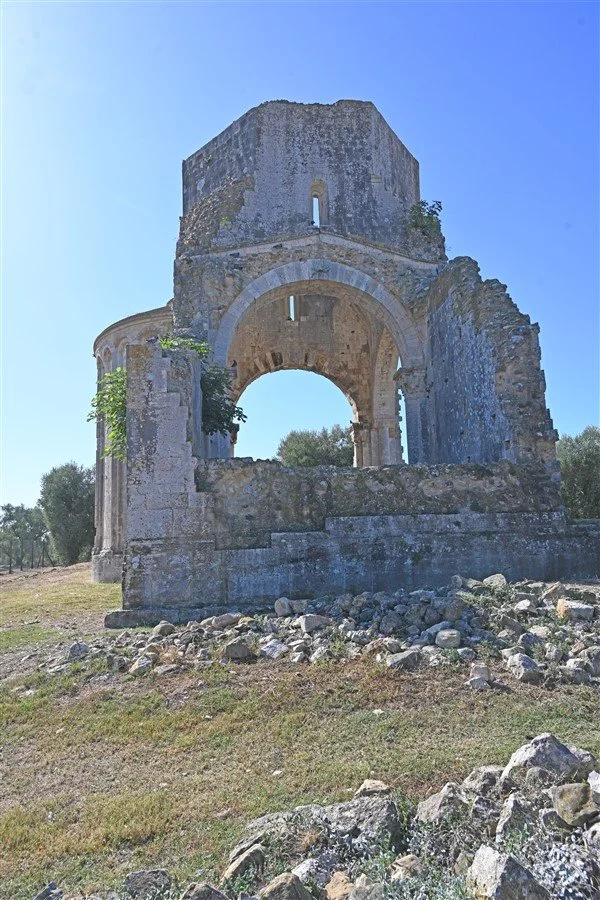
https://www.iluoghidelsilenzio.it/chiesa-di-san-bruzio-magliano-in-toscana-grosseto/
Project
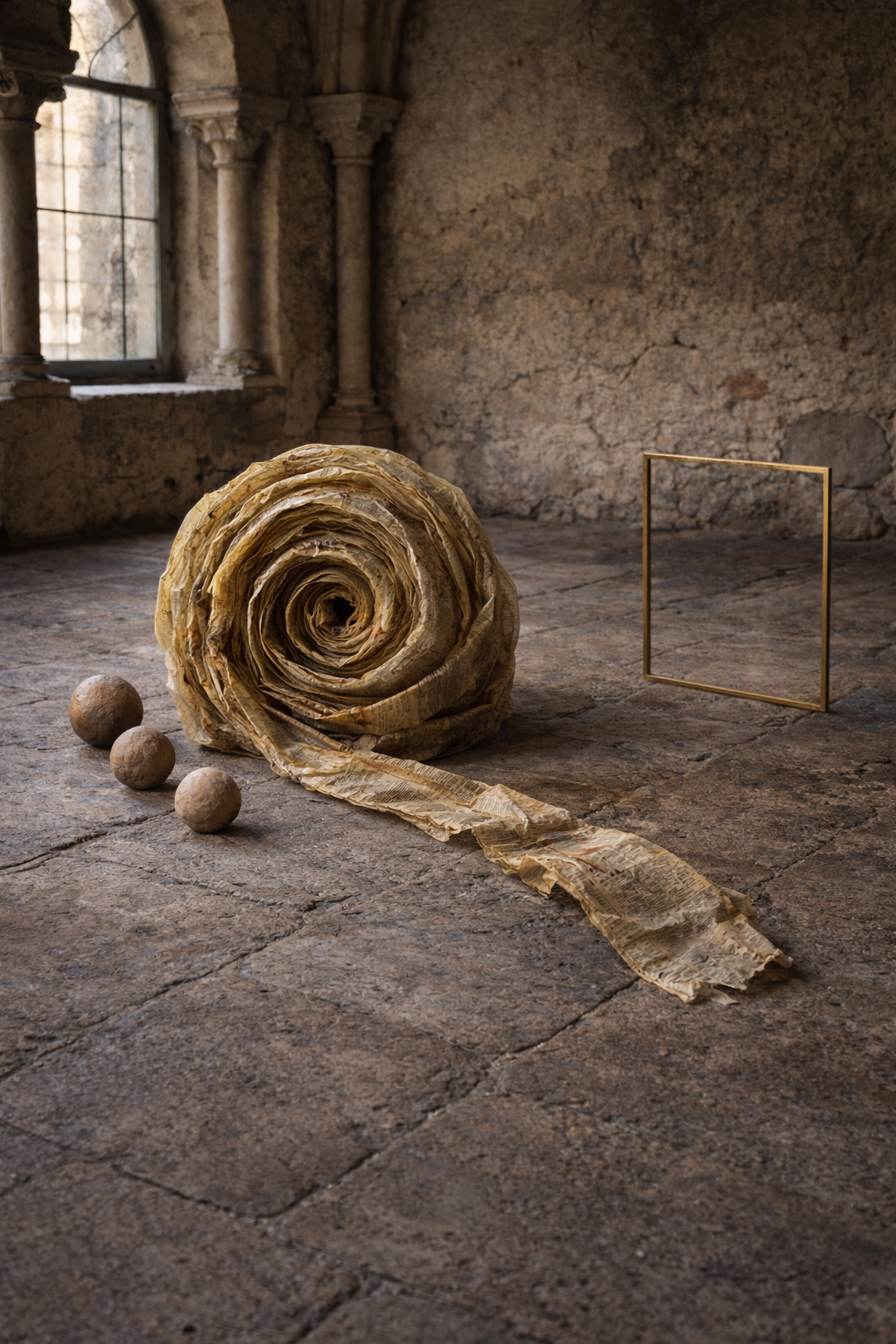
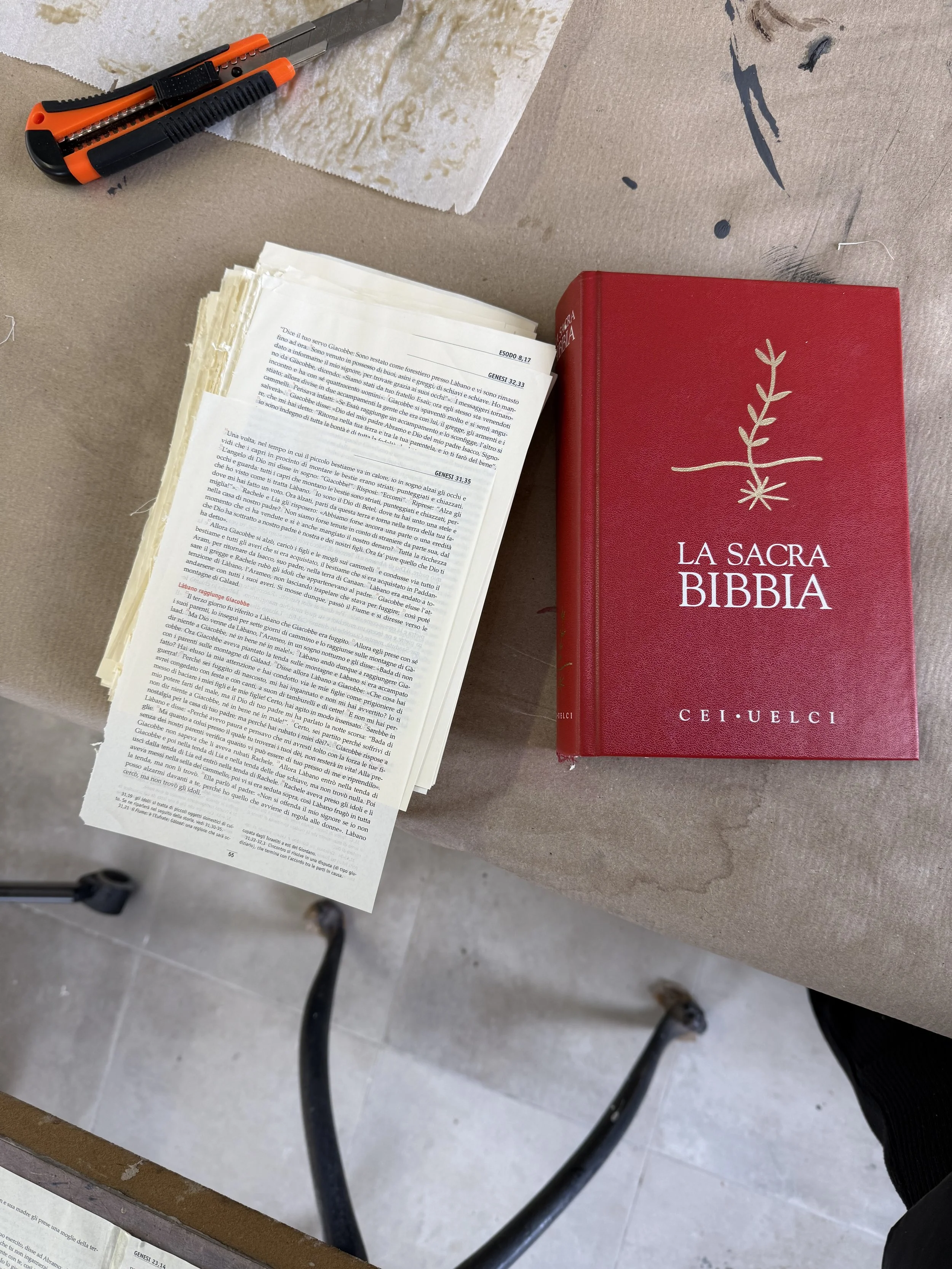
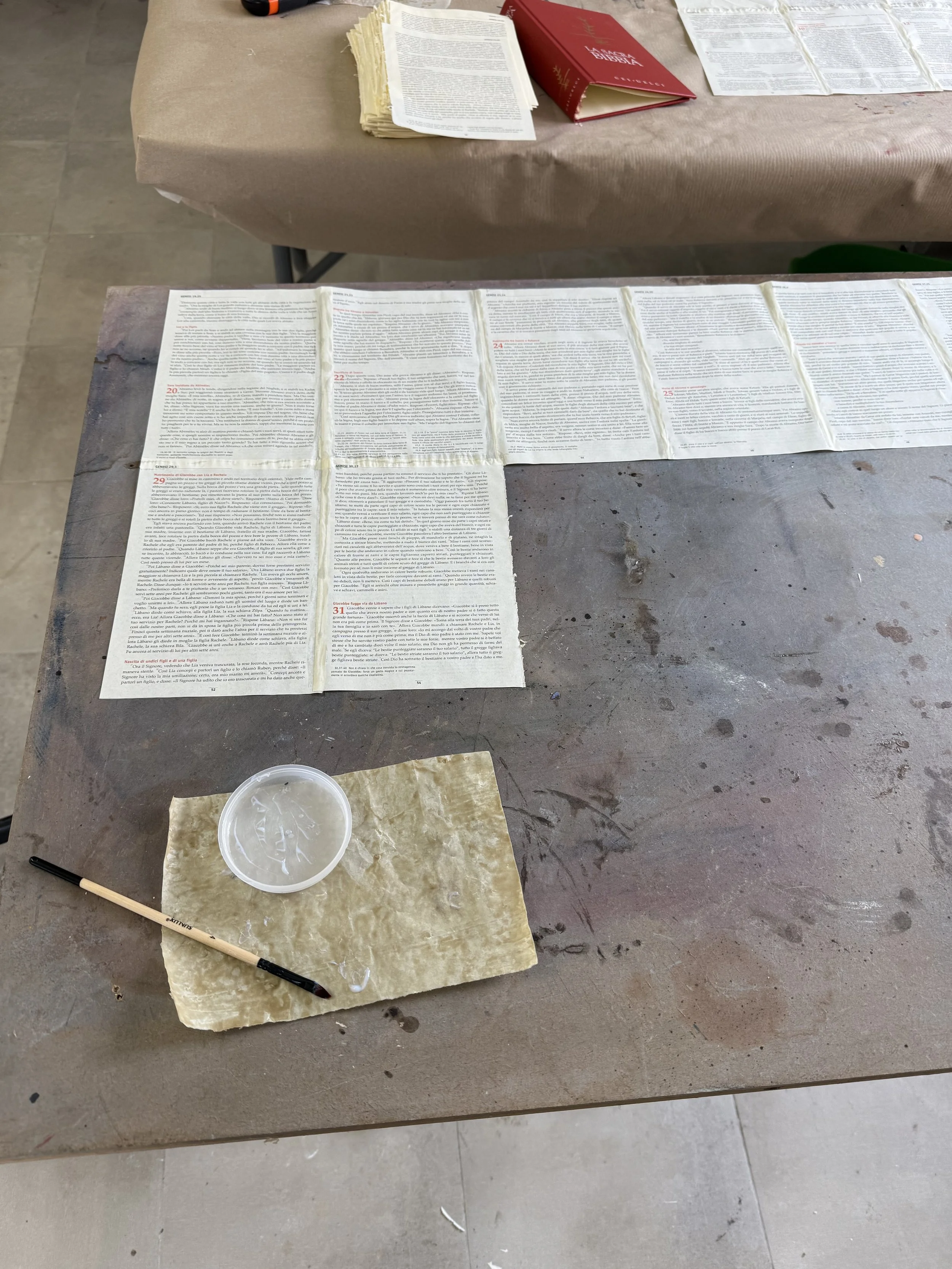
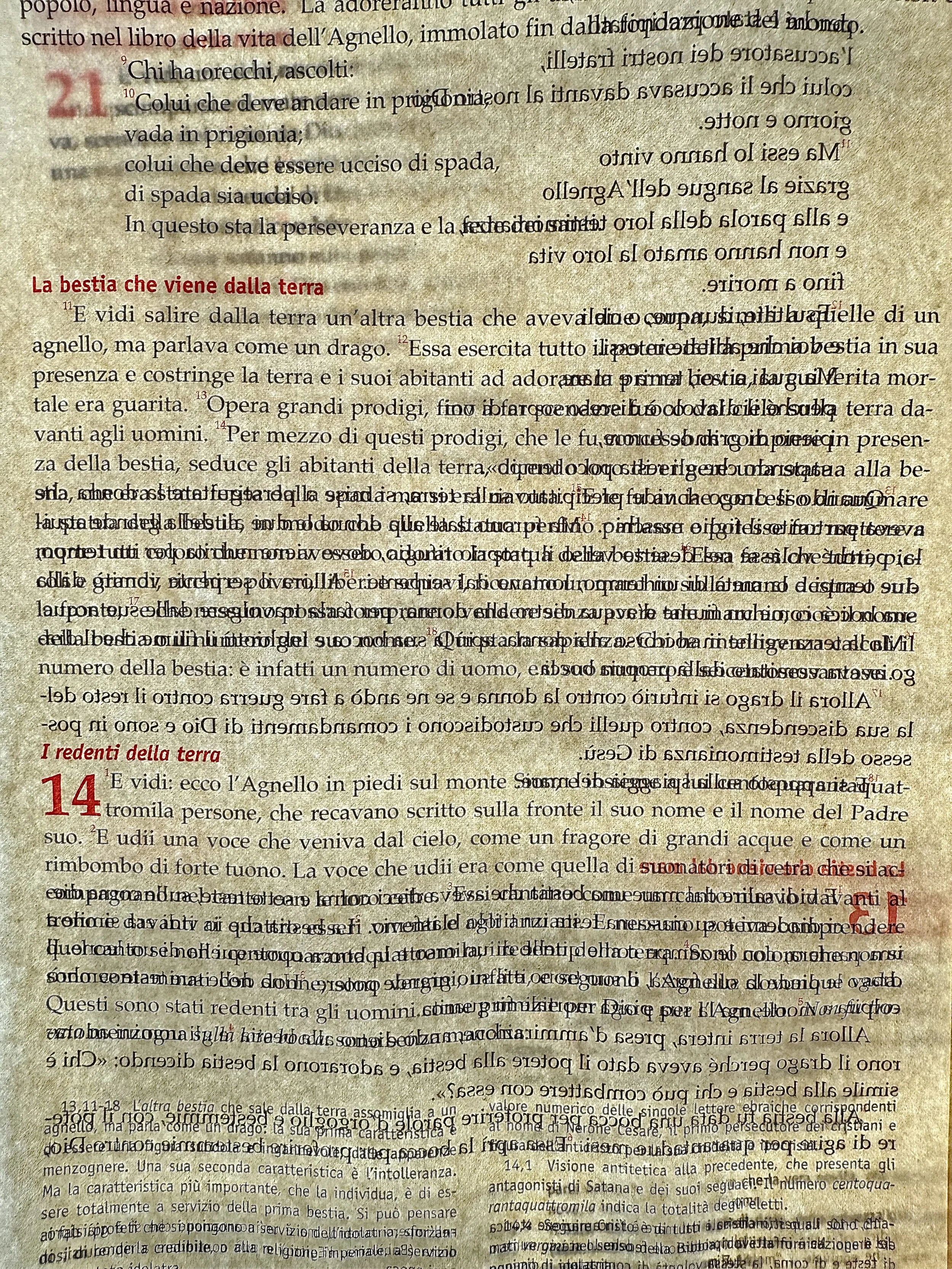
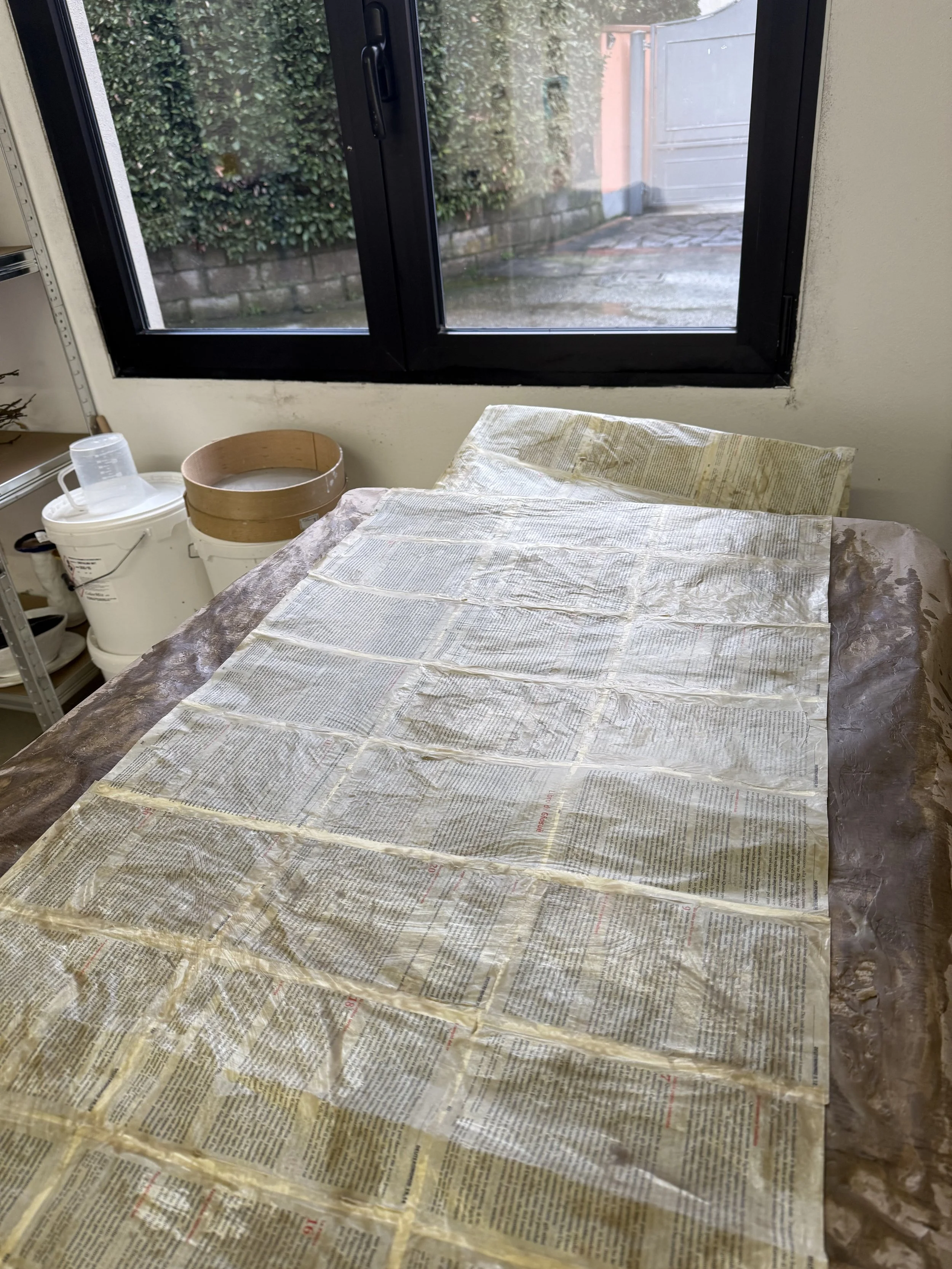
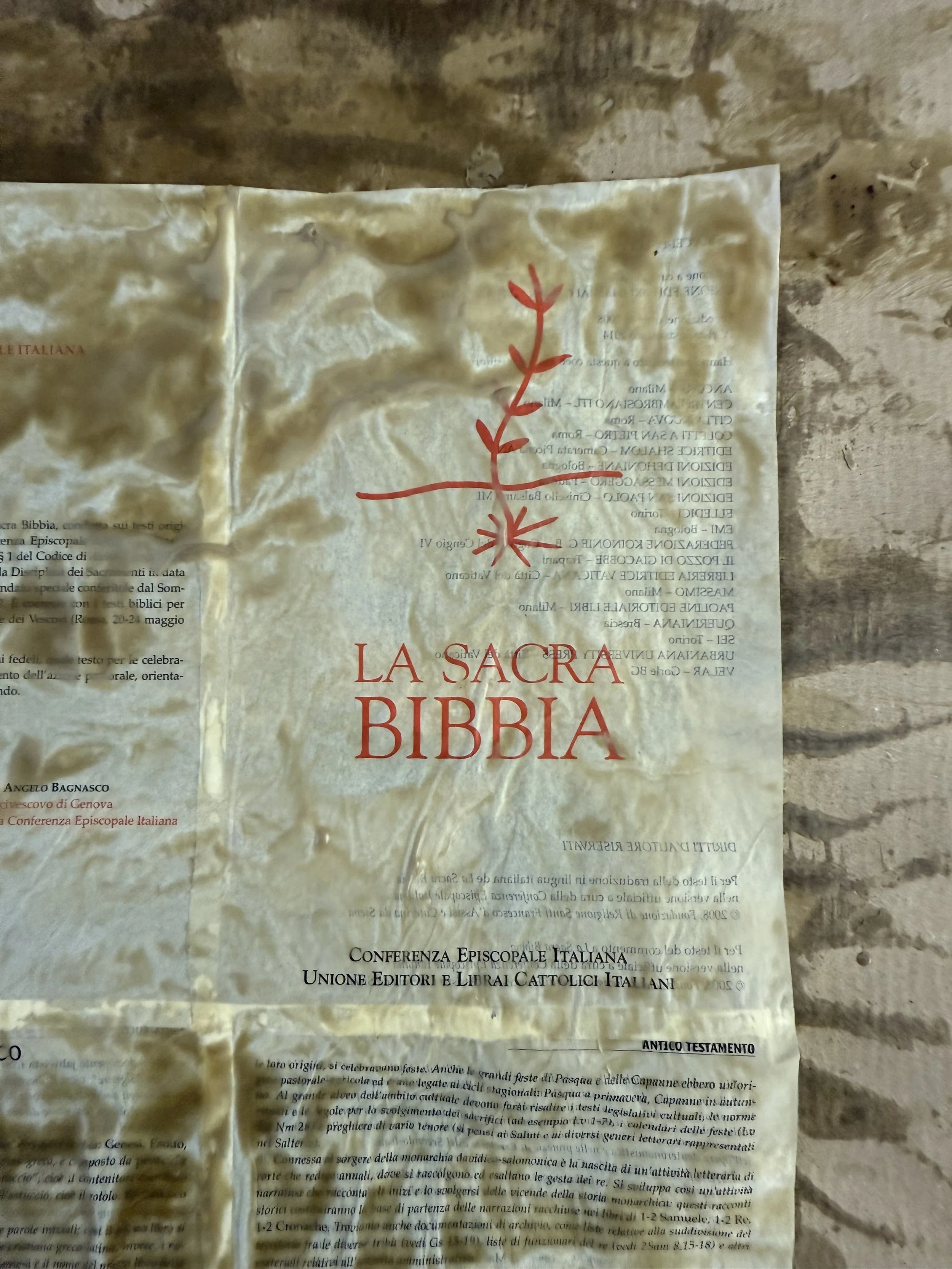
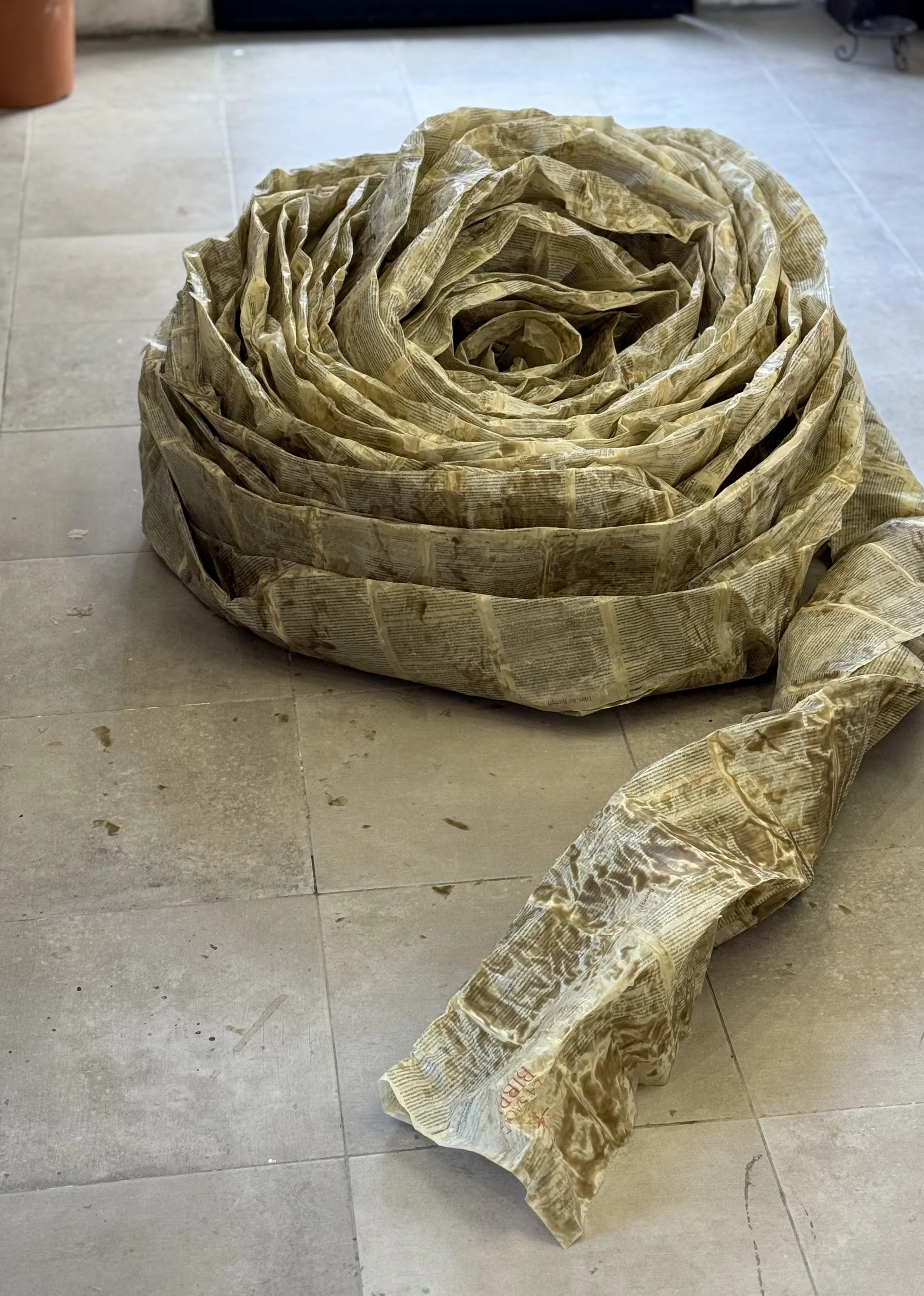
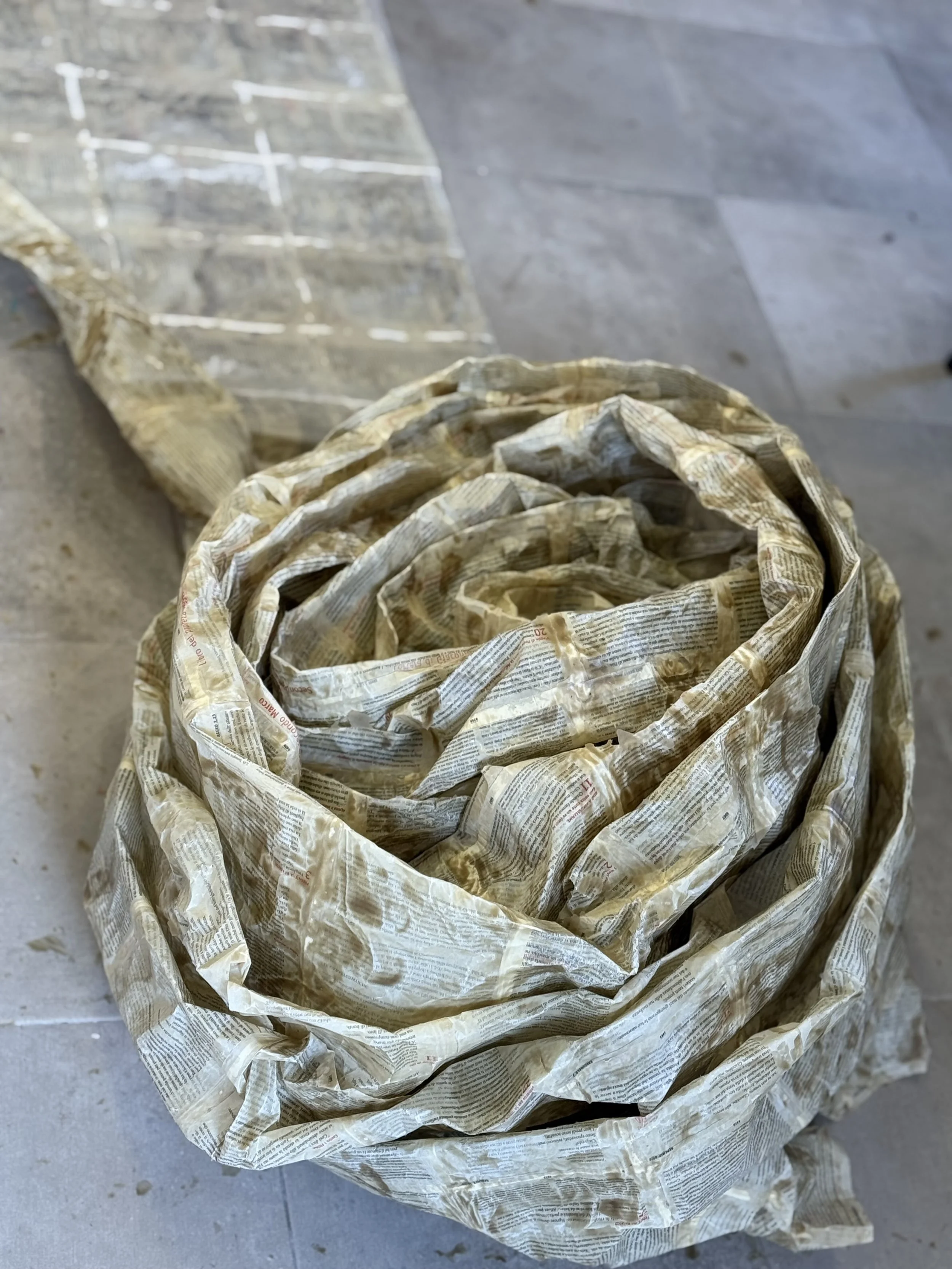
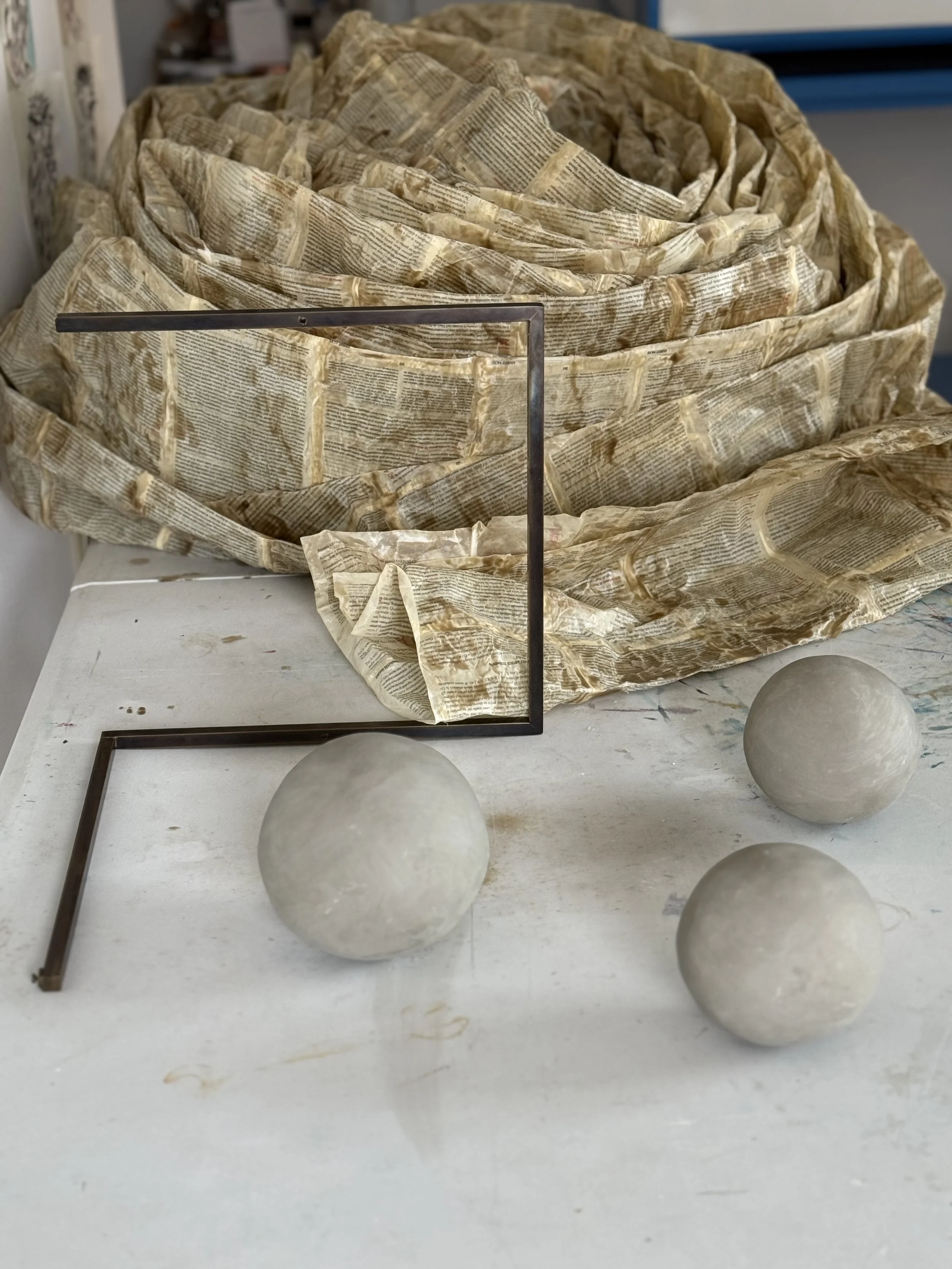
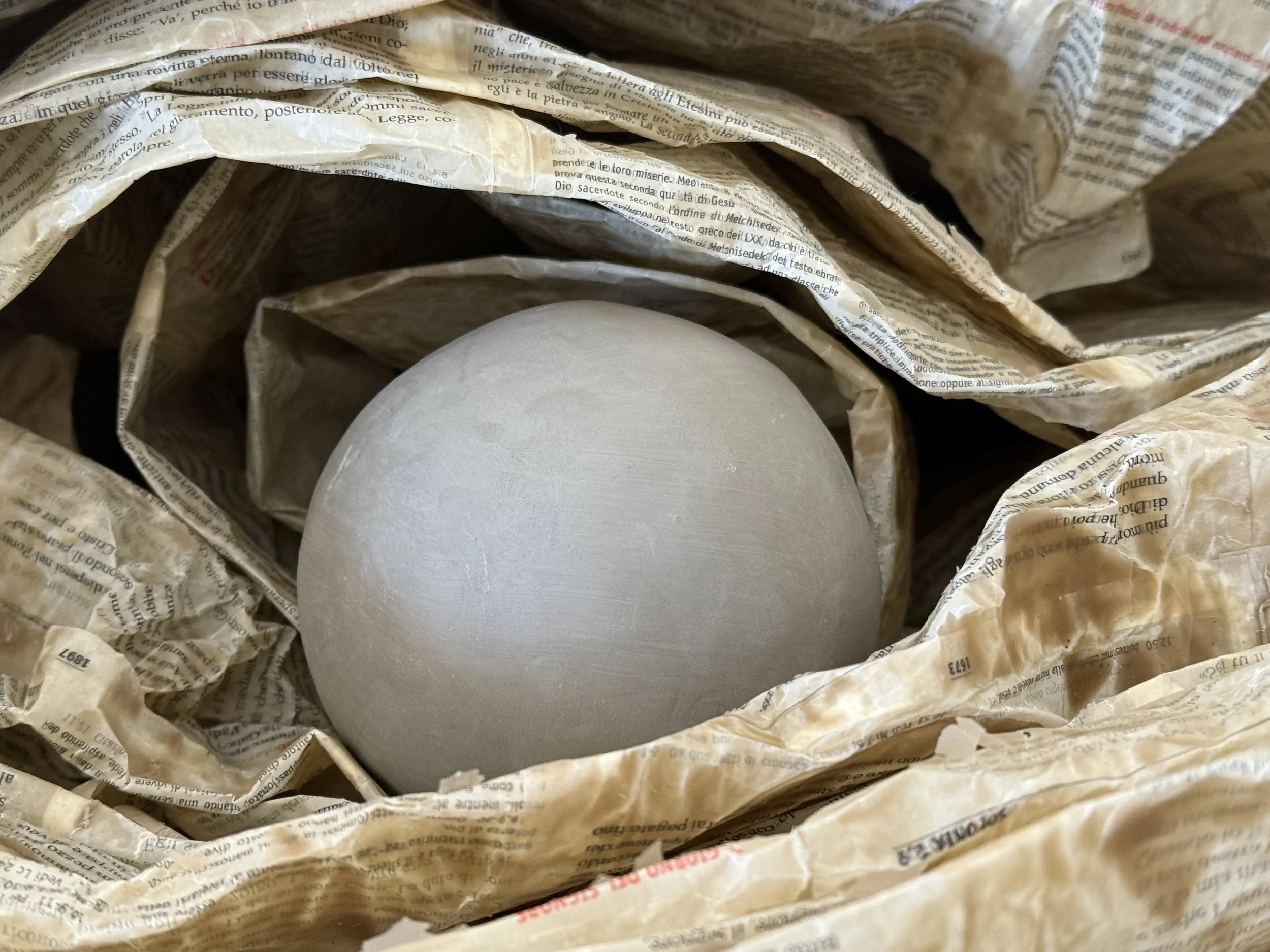
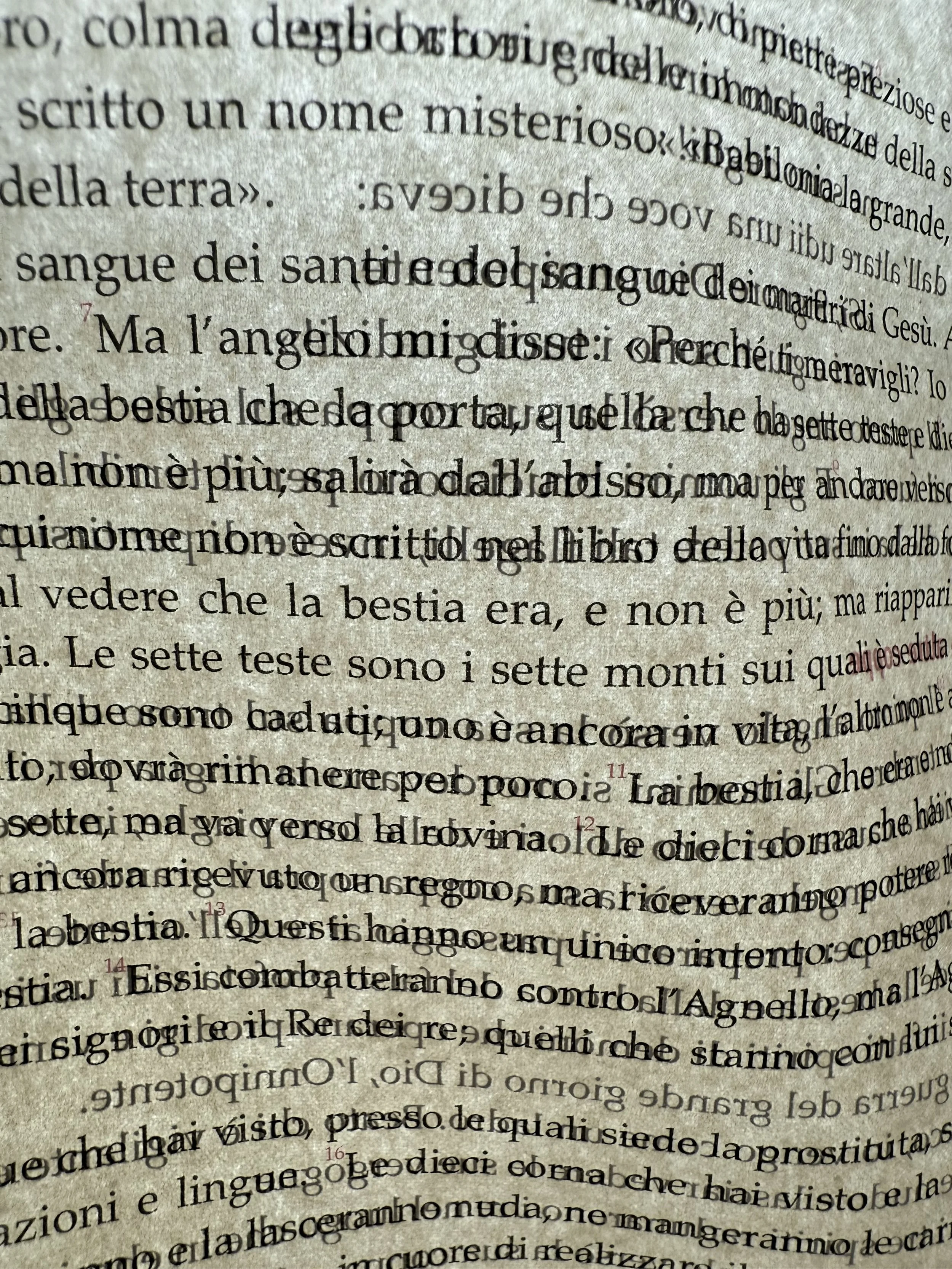
Time, Sacred began in January 2026 from an intuitive impulse to work with the material presence of the Bible. Rather than approaching it as a text to interpret, I began treating the book as a body capable of transformation. Through compression and the application of beeswax, the pages gradually lose their linear order and gather into a spiral mass. The surface becomes fragile and organic, recalling shed skin—an echo of my earlier body of work Exuviae, which explores the traces left behind after processes of growth and change.
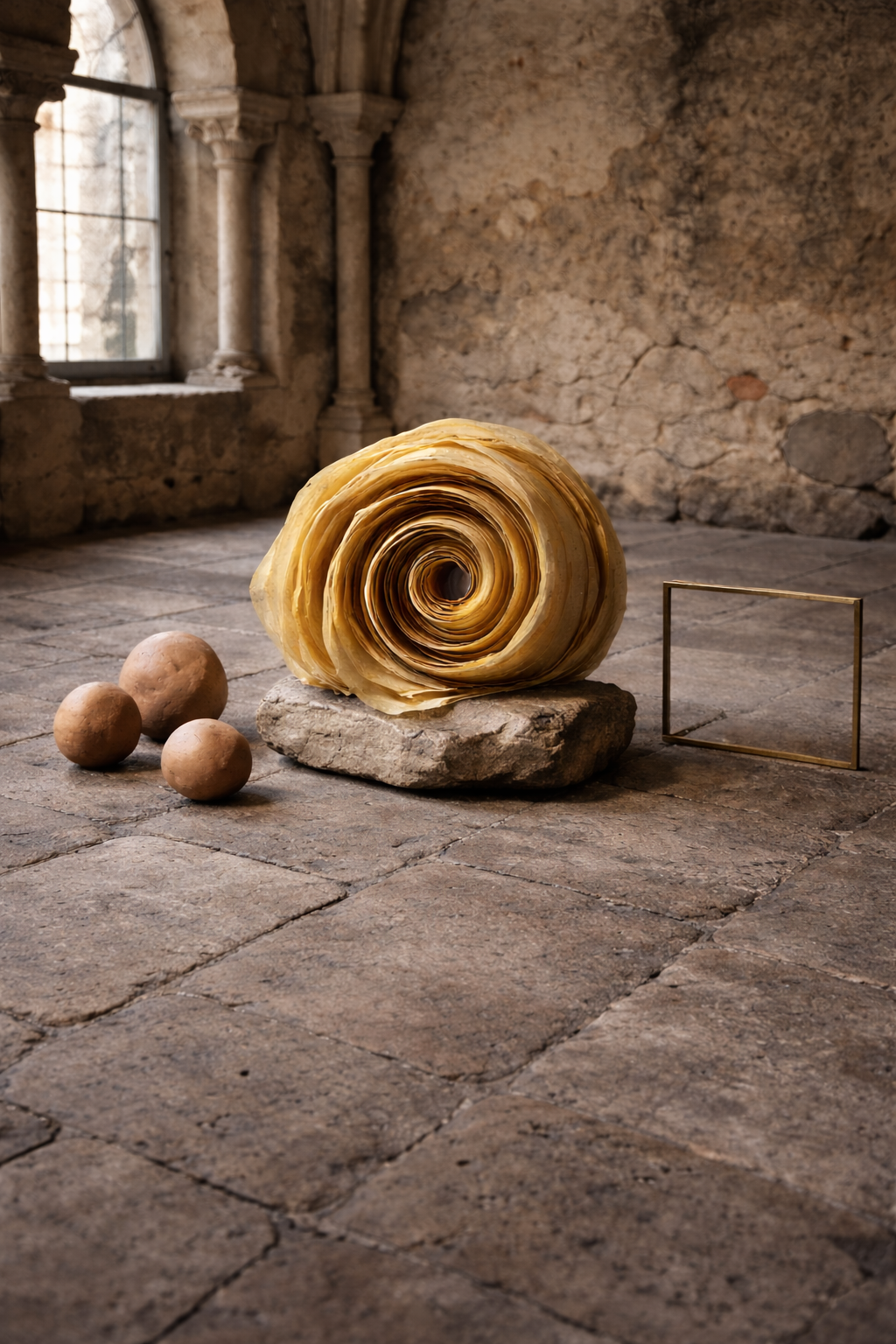
During the development of the project I began using artificial intelligence as a tool for speculative sketching. Through a series of conversations and generated images, AI allowed me to test possible spatial arrangements and imagine different environments for the work while the physical sculpture continued evolving in the studio. This dialogue between handmade material and computational speculation became an integral part of the process.
The work is intended to be installed and photographed inside the ruins of Chiesa di San Bruzio, an unconsecrated medieval church located near Magliano in Toscana in southern Tuscany. Installed directly on the stone floor, the sculpture will appear as if discovered within the architecture—temporarily inhabiting the space rather than occupying it.
The installation will exist physically only for a short moment, during a single afternoon dedicated to photographic documentation. From that encounter, the work will continue primarily through images and archival material. The project may eventually take the form of a catalogue tracing its development—from early AI studies and studio processes to its brief presence within the ruined church.